Massage Chair vs Massage Gun UK: Which Is Actually Worth the Money?
If you're looking to add some relief to your routine, you've probably noticed both massage chairs and massage guns plastered across shopping sites. They're not the same thing, and the choice between them comes down to what you're actually trying to solve—and how much space you've got. Let's cut through the noise.
What a Massage Gun Actually Does
A massage gun is a handheld percussive device. You hold it against your muscles, it vibrates rapidly, and it loosens tension in targeted areas. They're genuinely useful for what they do: a quick 30-second hit on tight shoulders, calves after a run, or that knot in your lower back. Brands like Theragun and Ekrin dominate the UK market, and prices range from £80 to £400 depending on power and build quality.
The appeal is obvious. They're portable, take 20 seconds of your time, and you don't have to sit down. You can throw one in a gym bag or keep it in a desk drawer. For someone doing heavy training or dealing with specific muscle soreness, they're genuinely handy. A good one will cut through tension faster than you can work it out yourself.
The trade-off is pretty stark though: you're treating one area at a time, and you need to be proactive about it. If you've got a sore shoulder, you have to remember to grab the gun, aim it, and spend five minutes on it. Most people buy them with good intentions and use them sporadically.
What a Massage Chair Actually Does
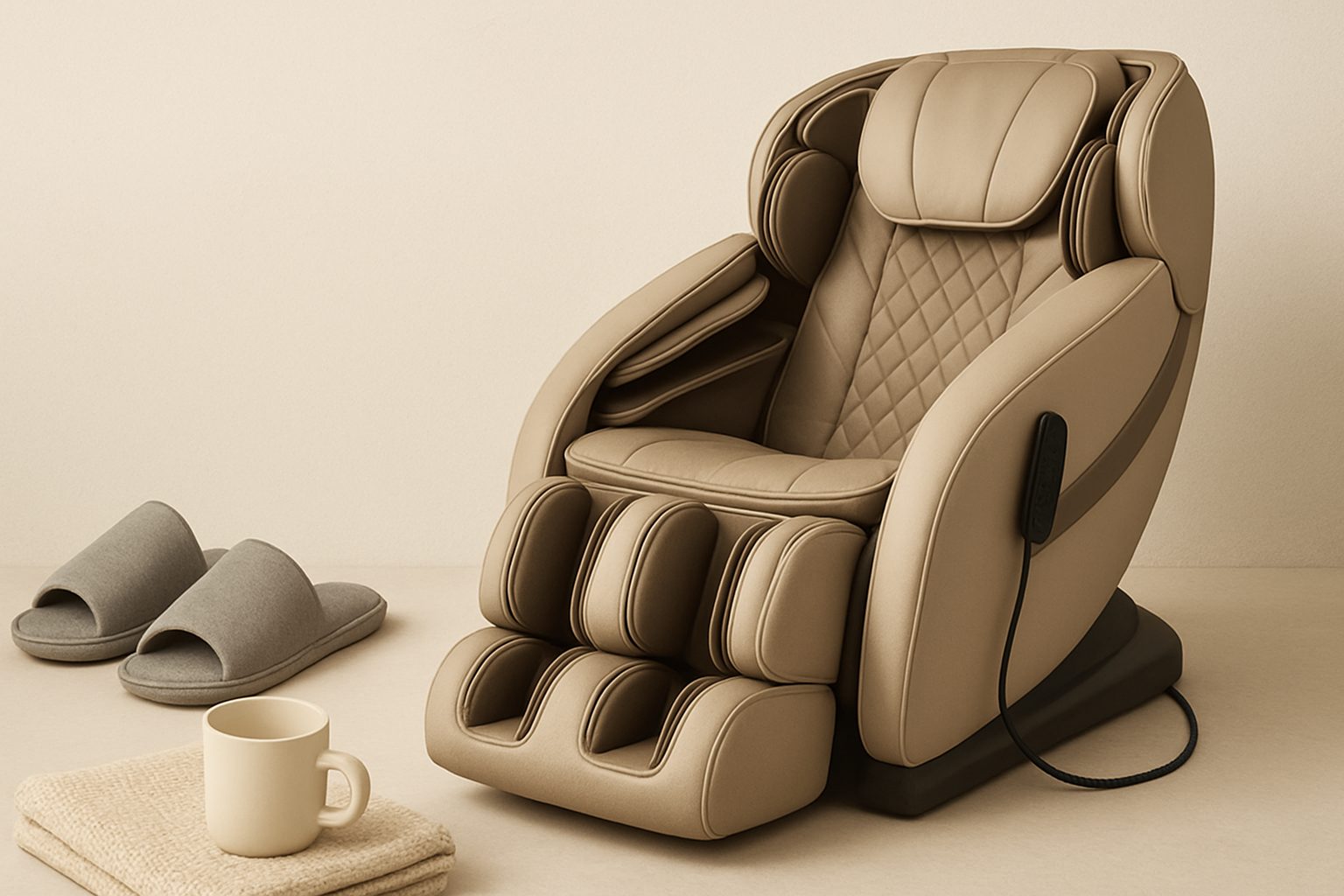
A massage chair is furniture. You sit in it for 15–30 minutes, and it works through your entire back, sometimes your legs and arms too. Most decent ones use a combination of rollers, air compression, and heating. You turn it on, lean back, and it does the work without you thinking about it.
The coverage is the big difference. A single session targets your whole posterior chain: neck, shoulders, mid-back, lower back, sometimes glutes. You're not deciding what to treat—the chair just gets it all. For someone with general tension from a desk job or poor posture, this matters. You're not patching one sore spot; you're giving your entire back a proper going-over.
UK-made and imported chairs range from £1,500 to £5,000+ for genuine build quality. Budget models exist at £600–£800, but they're often flimsy, noisy, and break within a couple of years. It's the kind of purchase where you really do get what you pay for.
Cost Comparison: The Elephant in the Room
A decent massage gun costs £150–£300. A decent massage chair costs £1,500–£3,000. That's a 5–15× difference, and it's the first thing that stops people.
But look at it another way: a massage gun handles one issue at a time. To get comparable full-body coverage, you'd need multiple guns, or you'd do 10–15 minutes of targeted work each evening. A massage chair does it in one 20-minute session. If you're comparing cost-per-problem-solved, the picture gets murkier.
That said: if you're buying because you think a massage device will magically fix your health, a gun is the cheaper way to find out it won't. If you're buying because you genuinely use recovery tools, a chair is the more practical investment.
Daily Use Reality
Most massage gun buyers use them for 2–4 weeks intensively, then sporadically. They require active intention. You have to think: "I should grab the gun now."
Most massage chair owners use them 3–5 times a week long-term. The barrier to entry is lower. You sit down in the evening, press a button, and read or watch something. It's passive. The effort friction is zero.
This is the strongest argument for chairs if you're after consistent daily relief. Consistency beats intensity. A 20-minute chair session three times a week beats sporadic five-minute gun sessions every month.
Space and Practicality
A massage gun goes in a drawer or on a shelf. A massage chair is a sofa-sized object in your living room or bedroom. If you live in a London flat with 2,000 square feet, that matters. If you've got a lounge or spare room, it's a non-issue.
That said, if you do have the space, a massage chair doubles as actual furniture. You watch telly in it, read in it, take calls from it. It's not just a wellness gadget sitting unused—it has daily utility independent of whether you're using the massage function.
Massage guns win on space. Full stop.
The Verdict
Buy a massage gun if:
- You're treating specific problem areas (tight shoulders, sore calves).
- You're active and want a recovery tool you can take with you.
- You've got limited space or budget.
- You actually will use it multiple times a week (be honest about this).
Buy a massage chair if:
- You want full-body relief from general tension.
- You're willing to use it consistently 2–3 times weekly.
- You've got the space and can afford £1,500+.
- You spend your evenings at home anyway (you'll use it more).
For most people sitting at desks all day, a massage chair delivers better value if you commit to using it. One session covers everything that stress and poor posture damages. A gun is great for gaps, but it's not a substitute for that kind of coverage.
The honest answer: they're not competitors. They solve different problems at different price points. But if you're asking which is "worth the money" for genuine daily relief, a chair wins—provided you actually have the space and will actually use it.
More options
- Amazon UK – Best Massage Chairs (General) (Amazon UK)
- Amazon UK – Zero Gravity Massage Chairs (Amazon UK)
- Amazon UK – Shiatsu Massage Chairs (Amazon UK)
- Amazon UK – Budget Massage Chairs Under £500 (Amazon UK)
- Amazon UK – Luxury & Premium Massage Chairs (Amazon UK)