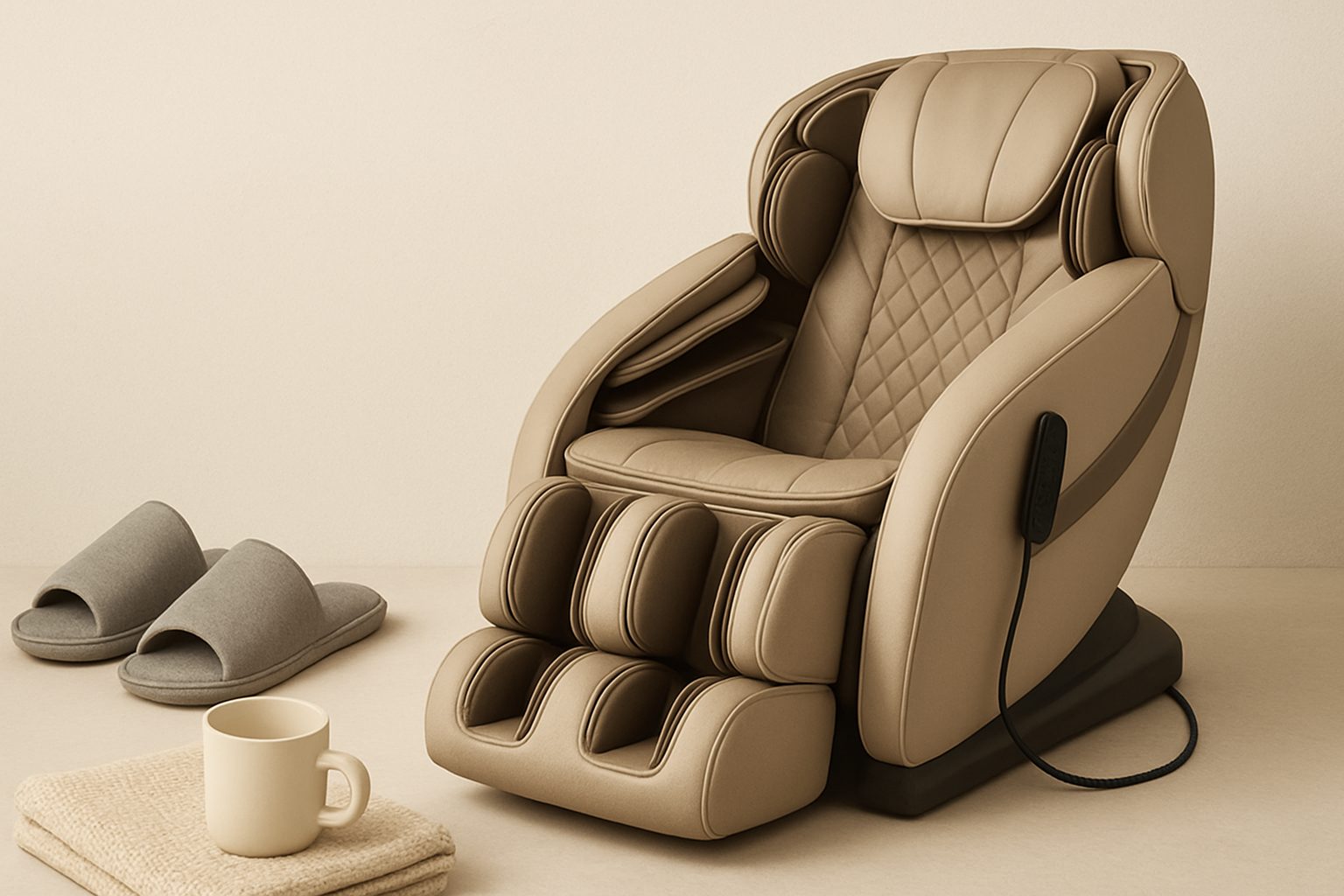
Best Massage Chairs for Back Pain UK 2025: Physio-Approved Choices
Back pain affects roughly two-thirds of UK adults at some point, and for many it becomes chronic. If you're considering a massage chair, you're looking at a real option—but not a cure-all. A good massage chair can genuinely ease muscular tension, improve circulation, and reduce pain for certain types of discomfort. The trick is knowing what actually works and where the limits are.
How Massage Chairs Actually Help Back Pain
Most back pain falls into two categories: muscular tension and referred pain from postural strain. A massage chair addresses the first directly by kneading, rolling, and applying heat to the back muscles. This increases blood flow, which flushes out metabolic waste that accumulates in tight muscles—the biological reason why massage feels effective, not just pleasant.
The second benefit is posture support. If you're spending eight hours slouching at a desk, your lumbar spine bears constant load. A chair with proper lumbar support can redistribute that load and reduce strain on the discs between your vertebrae. Over time, this reduces inflammation.
What a massage chair won't do: fix a slipped disc, correct scoliosis, or replace physical therapy. It's an adjunct, not a treatment.
What to Look For: The Key Features
Lumbar Support
The lumbar region (lower back) is where most people feel pain, and it's where a massage chair either delivers or disappoints. You need a chair with independently adjustable lumbar support—one that can target the curve of your spine, not a one-size-fits-all groove. The best chairs let you adjust both the height and depth of lumbar projection. Without this, you're paying for a feature that doesn't address your actual problem.
Many budget chairs have fixed lumbar support that works for an "average" person. If you're taller, shorter, or have an unusual curve, it misses the mark. This is worth prioritising.
Track Coverage: S-Track vs L-Track
S-track chairs follow the natural S-curve of your spine: neck to shoulder to mid-back to lumbar. They're gentler, quieter, and better for everyday use.
L-track chairs extend from neck to the base of your glutes, covering the entire back length. If chronic pain runs the length of your back, an L-track is worthwhile. They're bulkier, often louder, and typically more expensive—but they cover more ground.
For pure lower back pain, S-track is usually sufficient and will age better (fewer moving parts means fewer failures in five years).
Heat Therapy
Heat relaxes muscle fibres and opens blood vessels. A chair with zoned heating—where you can warm just the lumbar area or the full back—is more useful than all-or-nothing models. Look for settings you can adjust; some people find 40°C soothing, others need 50°C to feel benefit. Customisability matters.
Body-Scan Technology
This is the differentiator in mid-range and premium chairs. The chair uses infrared sensors to map your spine and adjust the massage intensity and positioning automatically. Without body-scan, the massage is generic. With it, a chair can sense that your left shoulder is tighter than your right, or that your lumbar dips deeper than average, and adapt accordingly.
It's not magic—the sensors aren't reading tissue damage—but they do catch postural asymmetries that a fixed program would miss. If you're between budget models and premium ones, body-scan is the feature to chase.
Intensity and Duration Settings
Back pain often flares in bursts. You might need vigorous massage during an acute flare, then lighter maintenance sessions afterward. A chair with adjustable intensity (at least three levels) and programmable session lengths (15, 30, 45 minutes) gives you flexibility. Budget chairs often lock you into a 20-minute preset. More control means you're more likely to use it without aggravating soreness.
What Massage Chairs Won't Fix
Be honest with yourself: if your back pain worsens when you lift, twists wrong, or at the end of long days, a massage chair will help manage it. If you have pain that's present all day, wakes you at night, or shoots down your leg, that's often nerve-related. A chair treats muscles, not nerves. You may get temporary relief, but the underlying issue needs investigation.
The same applies if pain is accompanied by numbness, weakness, or loss of bladder control—these are red flags.
When to Consult Your GP
Before investing in a massage chair, it's sensible to check with your GP, especially if pain is recent, severe, or associated with previous injury. They can rule out serious causes—disc herniation, spinal stenosis, osteoporosis—where massage could potentially worsen things if the underlying condition isn't managed properly.
A GP can also suggest whether physio or other intervention might be more effective for your particular problem. Many people benefit most from massage chairs combined with exercise and postural awareness, not in place of them.
Getting Started
Start with a trial period if possible. Some retailers offer in-store demos or short-term rentals. Pay attention to whether the lumbar support feels right for your curve, whether the intensity is adjustable enough, and whether you can comfortably sit in the chair for 20 minutes—awkward dimensions are a false economy.
Budget roughly £1,500–£3,500 for a chair with genuine lumbar adjustability, body-scan, and reliable heat zones. Under £1,000, you're usually compromising on lumbar support or durability. Over £5,000, you're often paying for aesthetics and premium materials rather than additional pain-relief benefit.
A good massage chair can genuinely ease back tension and improve comfort, especially for muscular pain and postural fatigue. It's a valid addition to a pain-management routine—just not a substitute for addressing root causes.
More options
- Amazon UK – Best Massage Chairs (General) (Amazon UK)
- Amazon UK – Zero Gravity Massage Chairs (Amazon UK)
- Amazon UK – Shiatsu Massage Chairs (Amazon UK)
- Amazon UK – Budget Massage Chairs Under £500 (Amazon UK)
- Amazon UK – Luxury & Premium Massage Chairs (Amazon UK)