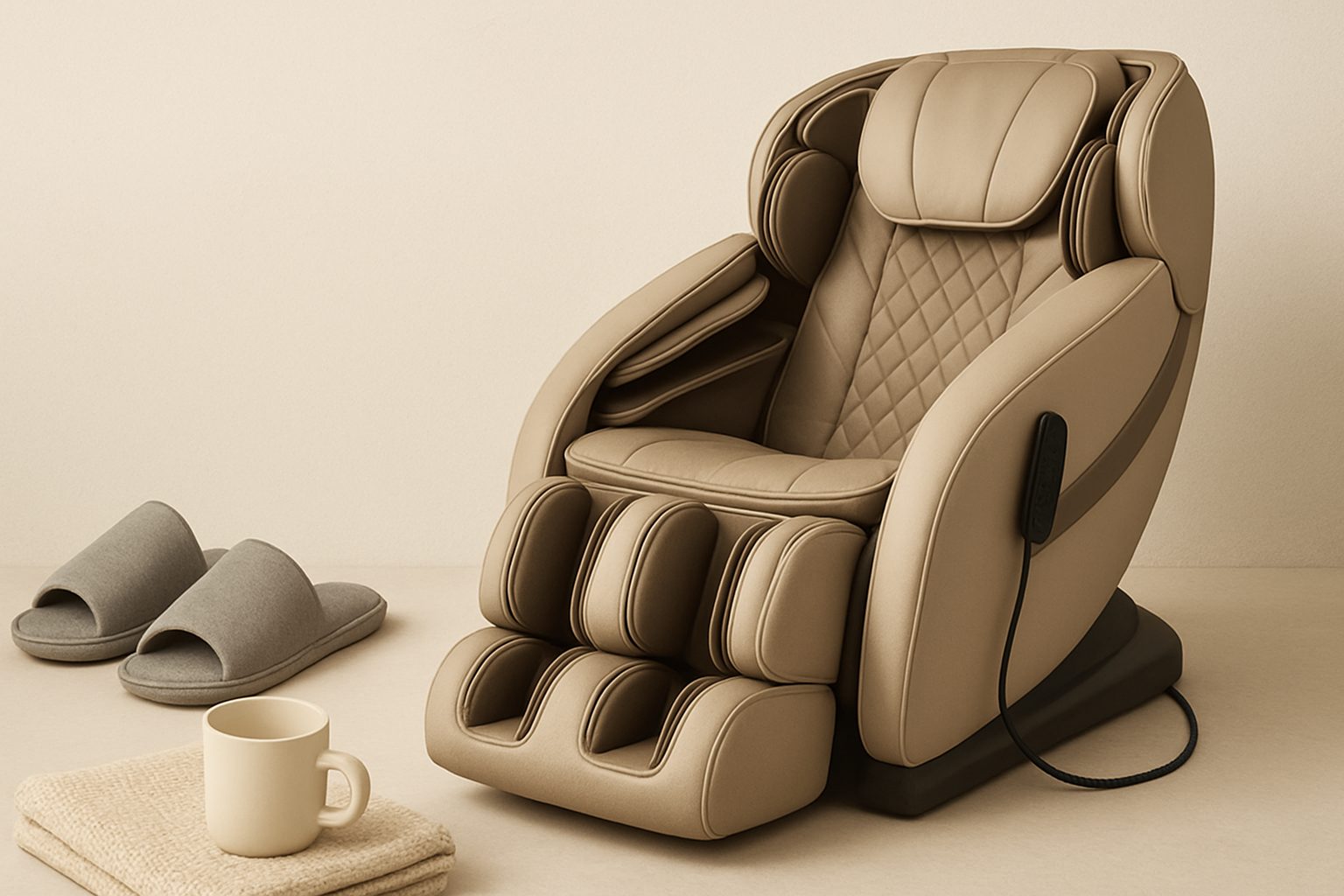
Best Luxury Massage Chairs UK (£2,000+): Premium Models Reviewed
If you're seriously considering a massage chair, spending above £2,000 opens access to genuinely different technology. These aren't incremental upgrades from mid-range models—they're machines designed with professional-grade components, AI personalisation, and materials that'll still function properly after a decade of daily use. This guide covers what actually separates a luxury massage chair from an expensive one, and which models deliver on their price tags.
What Changes Above £2,000
The jump from £1,500 to £3,000 isn't just about leather versus synthetic or extra massage zones. Luxury models typically include AI body scanning that learns your unique body contours, more durable air compression systems that don't wear out after two years, genuine Bluetooth integration for music and ambient features, and heating elements that work reliably long-term.
You're also paying for engineering. A £2,000+ chair uses better-quality motors, more predictable gliding mechanisms, and control systems that don't develop quirky bugs. The warranty coverage improves too—most premium brands offer 5-10 years on structural components instead of the standard 3 years.
That said, more expensive doesn't always mean better for you. A £5,000 chair with features you never use is a poor investment compared to a £2,500 model that matches your actual needs.
Osaki Pro Flagship Models
Osaki's premium range—particularly the OS-7000T and OS-8000T series—represents solid engineering for the price. These chairs use advanced roller technology with 70+ massage nodes and proprietary air compression systems that cover the full body methodically rather than frantically.
The AI body scanning feature actually works here. It takes your initial measurements and adjusts intensity, roller depth, and compression timing to your frame. For taller users or those with specific postural issues, this is genuinely valuable. The chairs also include genuine Bluetooth, so you can sync ambient sounds or guided relaxation audio during sessions.
Build-quality is consistent. The synthetic leather holds up without flaking, and the structural frame feels solid without rocking. One limitation: the footrest mechanism isn't motorised on most models, so you'll be pulling it out manually. It's a minor inconvenience if you use the chair daily.
Realistic ownership cost: Expect £100-150 annually for any repairs outside warranty, mainly air valve replacements or motor servicing.
Ogawa Master Drive
Ogawa's Japanese engineering philosophy shows in their luxury range. The Master Drive uses a 3D roller system that mimics actual human massage technique—rollers move laterally and vertically simultaneously, which reduces the repetitive feel you get from machines with simple up-and-down mechanics.
The heating system is a standout feature. Rather than basic heated pads, it uses far-infrared elements that penetrate deeper and warm up faster. Combine this with the 4D massage intensity, and you're getting something closer to a therapist's actual technique: gradual warm-up, varied pressure, release phases.
The downside is complexity. Ogawa chairs have more moving parts, which means more potential failure points. The control interface is also less intuitive than competitors—the menu structure takes a few sessions to navigate confidently. Customer support varies by UK distributor; some are responsive, others slow.
Realistic ownership cost: Potentially higher than Osaki, especially if electronics malfunction. Budget £150-250 annually after year three.
Luraco i9 and Premium Competitors
Luraco positions itself at the aspirational end of the market (£4,000-6,000+), targeting users who treat a massage chair as genuine therapeutic equipment rather than a luxury appliance. The i9 uses AI algorithms that adapt to your massage preferences over time, remembering your preferred intensity, duration, and focus areas.
Build quality is exceptional. The materials feel robust, and Luraco's warranty coverage is comprehensive. The Bluetooth chromotherapy feature (synchronized colour lighting) is genuinely well-implemented and doesn't feel gimmicky when used with relaxation audio.
The trade-off: you're paying significantly more for incremental improvements beyond what Osaki or Ogawa offer at £2,500-3,500. Unless you use the chair multiple times daily or have specific therapeutic needs, you might not recover that value.
Features Worth the Premium
AI body scanning: Genuinely useful, not marketing fluff. It meaningfully changes massage intensity distribution.
Bluetooth and chromotherapy: If you use the chair for relaxation as much as recovery, these enhance the experience. Basic versions feel cheap; premium implementations are solid.
4D/3D roller systems: More natural massage sensation than simple 2D rolling. The difference is noticeable within the first session.
Durable air compression: Premium air systems cycle smoothly and last longer. Budget models often develop whistling or weak pressure points within three years.
Heated elements: Far-infrared heating is noticeably better than basic pad heating, especially for muscle tension relief.
Extended warranties: 5-7 year coverage on a £3,000+ chair is worth it, given the repair costs for major components.
Practical Considerations
Space and setup matter more than spec sheets. Luxury chairs are larger and heavier (typically 120-160 kg). Measure your space before purchasing, and confirm the delivery team will position it properly—a poorly placed chair is a wasted purchase.
Usage patterns determine value. If you'll use it 3+ times weekly, a premium model pays for itself in longevity and reduced repair frequency. If it's occasional use, a well-reviewed £1,500 chair likely covers your needs.
Maintenance is straightforward but necessary. Wipe synthetic leather monthly, run cleaning cycles on air compression systems quarterly, and arrange professional servicing every 3-4 years. Neglect this, and even premium machines deteriorate.
Final Thoughts
The best luxury massage chair isn't the most expensive—it's the one that matches your body type, usage frequency, and actual feature priorities. Osaki and Ogawa represent genuine value at £2,500-3,500, with Luraco and comparable premium brands justifying their cost only if you're treating it as serious therapeutic equipment.
Test before buying if possible. The sensation of different roller systems, the responsiveness of AI scanning, and the build quality feel fundamentally different in person. That investment in testing time—even an hour at a showroom—beats any online review.
More options
- Amazon UK – Best Massage Chairs (General) (Amazon UK)
- Amazon UK – Zero Gravity Massage Chairs (Amazon UK)
- Amazon UK – Shiatsu Massage Chairs (Amazon UK)
- Amazon UK – Budget Massage Chairs Under £500 (Amazon UK)
- Amazon UK – Luxury & Premium Massage Chairs (Amazon UK)