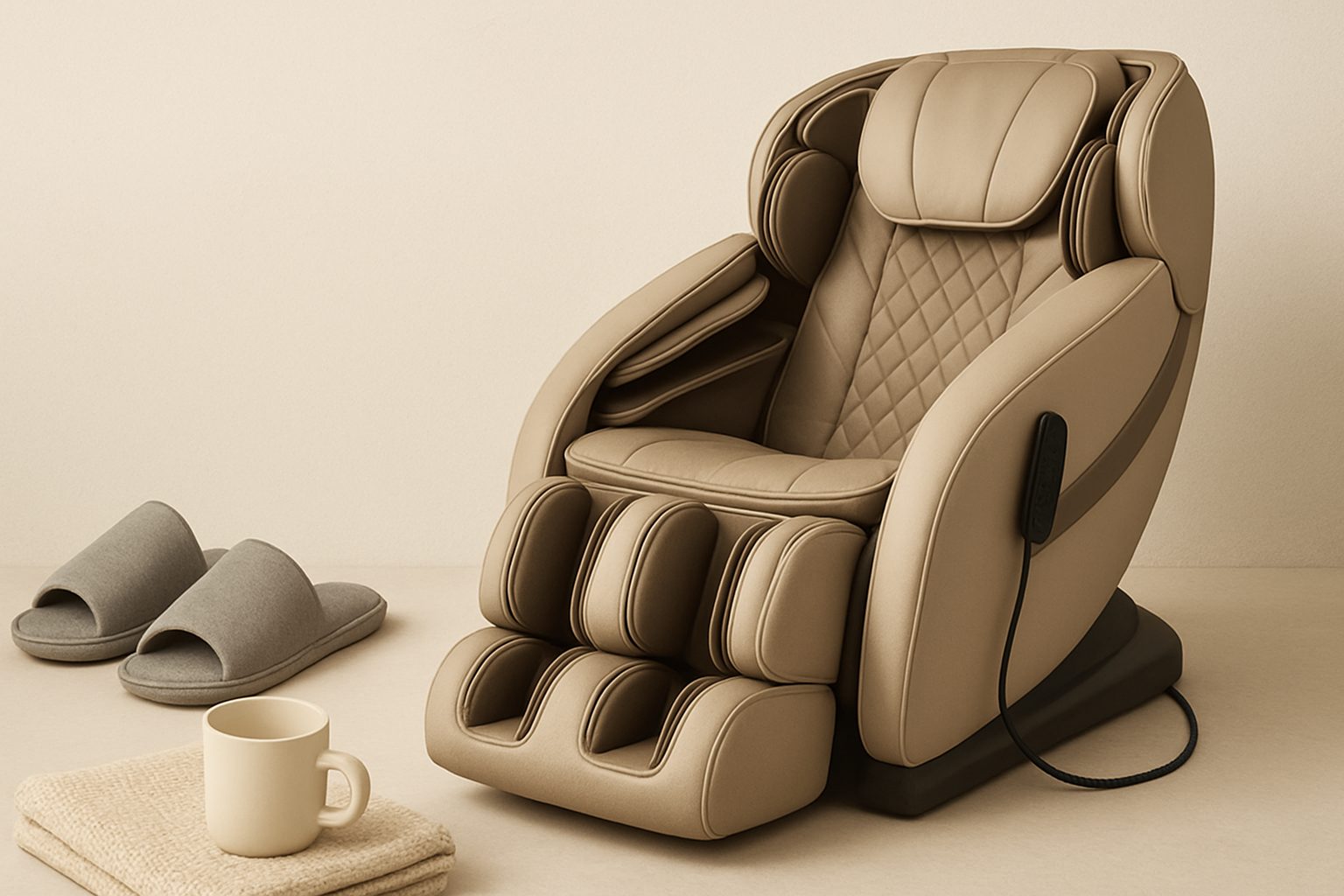
Are Massage Chairs Worth the Money in the UK? Honest Assessment
The short answer: for most people in the UK, a massage chair won't replace professional massage therapy, but it might be worth the investment if you fit a specific profile. Let's break down the real economics and save you from an expensive mistake.
The Cost-Per-Session Reality
This is the question that stops people. A decent massage chair costs £2,500–£6,000 upfront in the UK market. A professional deep-tissue massage runs £60–£120 per session depending on where you live and the therapist's experience.
Do the maths: a £4,000 chair pays for itself in 33–66 sessions if you value your time at what a therapist costs. That's plausible if you use it regularly, but there's the catch. Most people don't. Surveys consistently show that massage chair ownership peaks in the first three months, then drops off sharply. By year two, many chairs sit gathering dust.
The honest comparison isn't chair versus one massage. It's chair versus the actual habits you'll sustain. If you'd genuinely book a therapist twice monthly, that's 24 sessions yearly—just under £2,000 annually. A £4,000 chair saves you money in year two onward. If you'd realistically use it monthly or less, you've overpaid for convenience.
What Massage Chairs Actually Do (And Don't)
A quality massage chair applies rolling, kneading, and percussion movements to your back and lower body. It's mechanised repetition, not hands-on assessment.
Where they work:
- Muscular stiffness from desk work or driving
- General relaxation and circulation improvement
- Consistent, reliable relief for chronic mild tension (the kind that doesn't need a therapist's diagnosis)
- Post-exercise muscle soreness
- Everyday convenience—you don't need an appointment or travel time
Where they fall short:
- They can't diagnose or address structural problems (a twist, a pinched nerve, a postural misalignment)
- They don't adapt mid-session like a human therapist would ("that spot's too tender, ease off")
- They won't reach trigger points with precision or sustained pressure
- They can't assess whether your pain is muscular or something else entirely
- Budget models often use generic pre-set routines—not responsive to your actual tension patterns
If you've never had a professional massage and you're hoping a chair will solve chronic back pain, you're very likely to be disappointed. If you use a therapist occasionally and want something in between, a chair makes more sense.
The Durability Question
A mid-range massage chair (£3,000–£5,000) typically lasts 5–7 years with normal use. Higher-end commercial models last longer. Budget models under £1,500 often develop mechanical issues within 3–4 years: motors wear out, fabric tears, the mechanisms start grinding.
The UK warranty picture is mixed. Many imported models come with 12-month manufacturer guarantees; repairs often mean sending the chair back abroad, which costs £300–£600. Some retailers offer extended warranties, but read the fine print—many cover mechanical failure, not wear-and-tear.
That durability matters to your cost calculation. A £4,000 chair lasting six years costs roughly £670 yearly (before electricity, around £30–£50 annually). A £1,200 chair lasting three years costs £400 yearly. The maths aren't as clear-cut as sticker price suggests.
Who Benefits Most
A massage chair is genuinely worthwhile if:
- You have a dedicated space for it (they're substantial furniture, not small)
- You'd use it at least three times weekly for relaxation or recovery
- You have mild-to-moderate muscular tension from work or exercise, not acute pain or injury
- You prefer consistency and convenience over personalised assessment
- You can afford it without strain and won't resent the purchase if usage drops
You're probably wasting money if:
- You've never had a massage and are hoping a chair will diagnose or fix pain
- You're buying it to avoid seeing a therapist about a genuine injury
- Your space is limited and it'll feel intrusive
- You're financing it over three years or more (that's paying interest on depreciating furniture)
- Your motivation is novelty—chairs are boring to use after the first month
The Budget Alternative
If you're on the fence, start with a £800–£1,500 mid-range shiatsu chair. These deliver legitimate relaxation and general relief without the financial commitment. Yes, the motors are less powerful and the build quality is thinner, but they'll tell you whether you're actually a "massage chair person."
Many people discover they're not. They try one at a friend's house, like the idea, buy their own, and abandon it after six weeks. A smaller financial hit teaches you about yourself more cheaply than a £5,000 mistake.
The Verdict
A massage chair is worth it if you're replacing therapist visits you'd genuinely book, you have space for it, and you know yourself well enough to predict you'll actually use it. It's not worth it if you're hoping it'll diagnose or fix pain, or if you're buying convenience you won't actually practice.
Start modest, test your real usage patterns, and upgrade later if a budget model proves you're committed. The UK market has options at every price point. Spending smart beats spending big on the wrong chair.
More options
- Amazon UK – Best Massage Chairs (General) (Amazon UK)
- Amazon UK – Zero Gravity Massage Chairs (Amazon UK)
- Amazon UK – Shiatsu Massage Chairs (Amazon UK)
- Amazon UK – Budget Massage Chairs Under £500 (Amazon UK)
- Amazon UK – Luxury & Premium Massage Chairs (Amazon UK)